
SKYWARD ENIGMA
A Third-Person Survival-RPG
simulating a 4 Km2 Open World Experience
PROJECT OVERVIEW
Originally developed in Unreal Engine 4.27 using World Composition, this personal project has since been migrated to Unreal Engine 5 and rebuilt using World Partition.
Over several years of continuous development, it has evolved into a true passion project, undergoing multiple iterations in both gameplay and artistic direction.

OPEN WORLD LEVEL DESIGN TECHNIQUES
To maintain a strong flow state, the world is designed using a wide range of level design principles that naturally encourage exploration while minimizing player confusion.
LANDMARKS
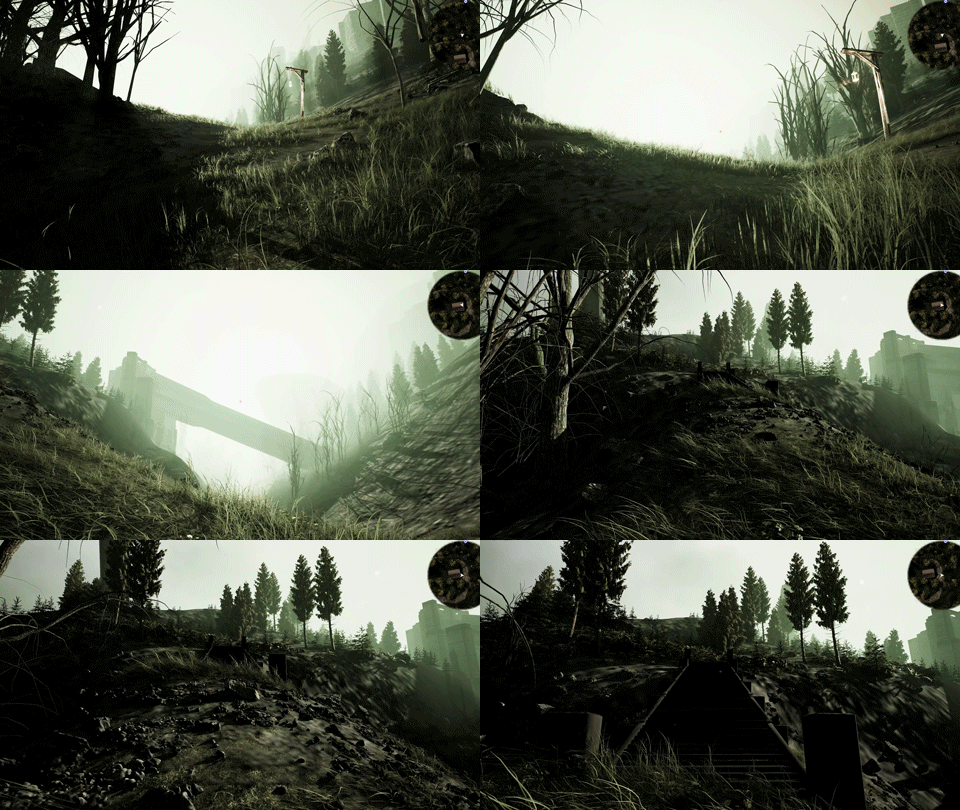
Prominent landmarks, distinctive biomes, and carefully placed visual cues continuously orient players as they navigate an unfamiliar world.
AFFORDANCE
Environmental affordances subtly communicate where players can go, encouraging them to follow the critical path or venture off the beaten track in search of hidden locations, valuable resources, and optional challenges.

TUNNELING, LEADING LINES & ATTRACTIVE OPENINGS
Rather than forcing exploration, the world allows players to express their own intentions through their navigation choices.
Along every journey, carefully placed quests, encounters, landmarks, and environmental storytelling create meaningful distractions that reward curiosity and reinforce the sense of adventure.

OPEN WORLD
STRUCTURE
The central city serves as the world's primary visual anchor, offering a 360° panoramic view that helps players understand the surrounding landscape and plan future expeditions.
VERTICALITY
Climbable mountains, natural pathways, hidden passages, and layered terrain create multiple routes while supporting a variety of gameplay mechanics, traversal abilities, and combat scenarios.
The environment itself becomes an active part of the gameplay experience rather than simply a backdrop.


VANTAGE POINT
The environment provides opportunities to observe enemy behavior, evaluate threats, and prepare different strategies before engaging in combat.
Both common enemies and boss encounters are carefully distributed throughout the world to gradually increase challenge while supporting multiple playstyles.
LEADING LINES,
TUNNELING
Ensuring the player is guided
through the right direction while allowing freeroam expression are at the core of the level.


BAIT & SWITCH RED HERRING
Hidden paths, overlooked landmarks, and delayed reveals create moments of surprise that encourage exploration and reward attentive players.
ENCOUNTER DESIGN
Common Enemy and Boss encounters, ensuring various playstyles while uping the level intensity.

UNIQUE BIOMES DESIGN
that dictates the pacing and gameplay of the region


PLANIFICATION
-
Terrain generated using Terraform/Gaia
-
Biome heightmaps and texture blending created in Adobe Photoshop
-
Terrain refined and sculpted directly in Unreal Engine
The project is supported by extensive design documentation, including:
-
World maps
-
Level Design Documents (LDD)
-
Gameplay flow diagrams
-
Difficulty progression
-
Resource distribution
-
Quest progression
-
World Partition organization
-
Data Layer management
-
Custom streaming volumes for efficient loading and unloading
ENVIRONMENTAL BLOCKOUT
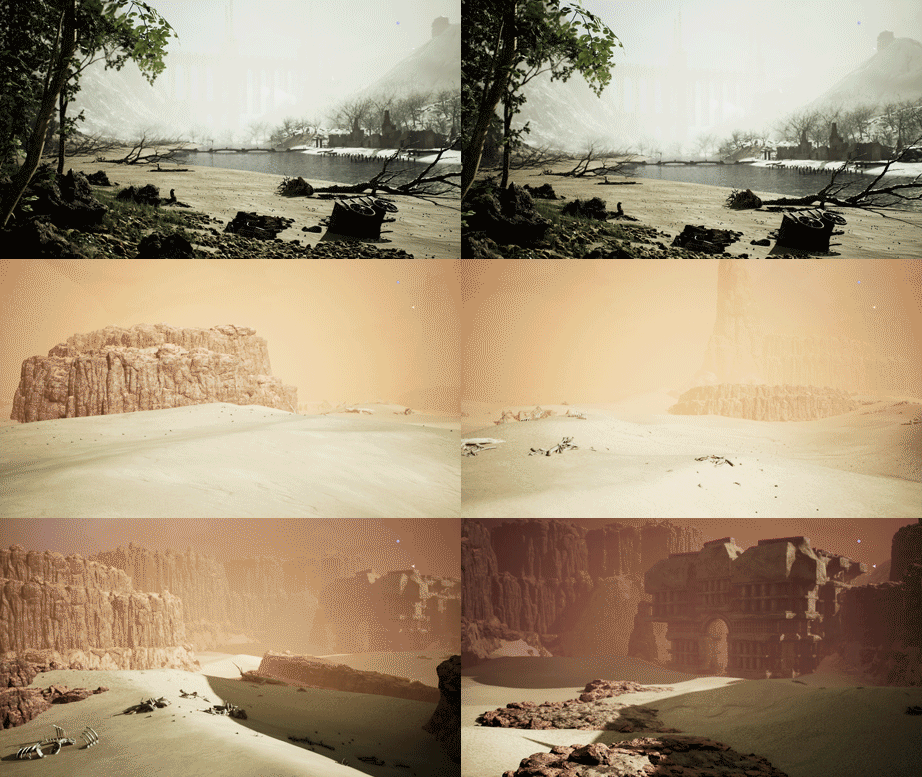
Each biome is designed with its own visual identity, gameplay rhythm, and environmental challenges.
Rather than functioning solely as aesthetic variations, biomes influence pacing, traversal, exploration opportunities, encounter density, and player progression throughout the world.

MULTI-LEVEL TRAVERSAL DUNGEON PLANIFICATION
Designed using Unreal Engine 5, Data Layers, and the Modeling Tools.


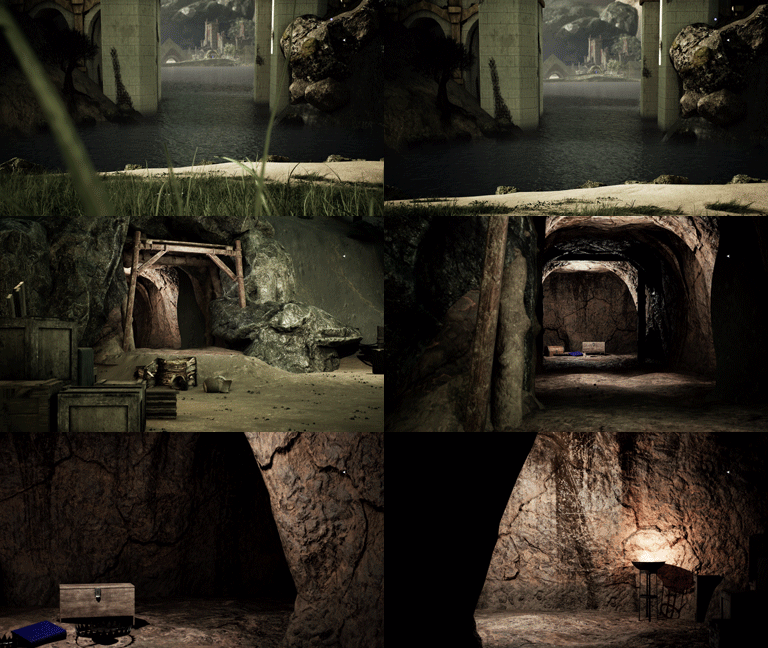
This dungeon was designed around a dual-direction traversal philosophy, allowing players to enter and complete it from either side while maintaining a coherent gameplay experience.
Beginning in the Coastal Village Mausoleum, players descend into an interconnected sewer system leading to a restricted temple occupied by enemy cultists, an abandoned mine inhabited by skeletons and culminating in a sub-boss encounter, and finally an ancient Mayan-inspired temple located at the mountain summit.
Each area can be explored and completed in reverse order, encouraging player agency, replayability, and non-linear progression.
OVERVIEW
INTEGRATION
in First and Third Person Template
with a Custom Faked Day-Night Cycle.


SOFT & HARD GATES
Below, an interaction puzzle that requires the correct item.


POLISH & GAMEPLAY INTERGRATION
Ennemy / Loot / Lore placement


HARD, SOFT AND PROGRESSIVE REVEALS
Revealing vistas, locations and POI


LORE, QUEST
& NARRATIVE ENVIRONNEMENT
The world is populated through dynamic NPC, vendor, and enemy spawning systems based on the player's location, creating a more believable and reactive environment.
Points of Interest (POIs) are enriched with environmental storytelling, character interactions, and lore that encourage exploration beyond the main objectives.
Narrative moments are delivered through Level Sequences, scripted gameplay events, and custom-rendered cinematics to enhance immersion while maintaining player engagement.

CUSTOM MADE GAMEPLAY SYSTEMS
Together, these systems create a cohesive world that feels responsive, immersive, and alive.
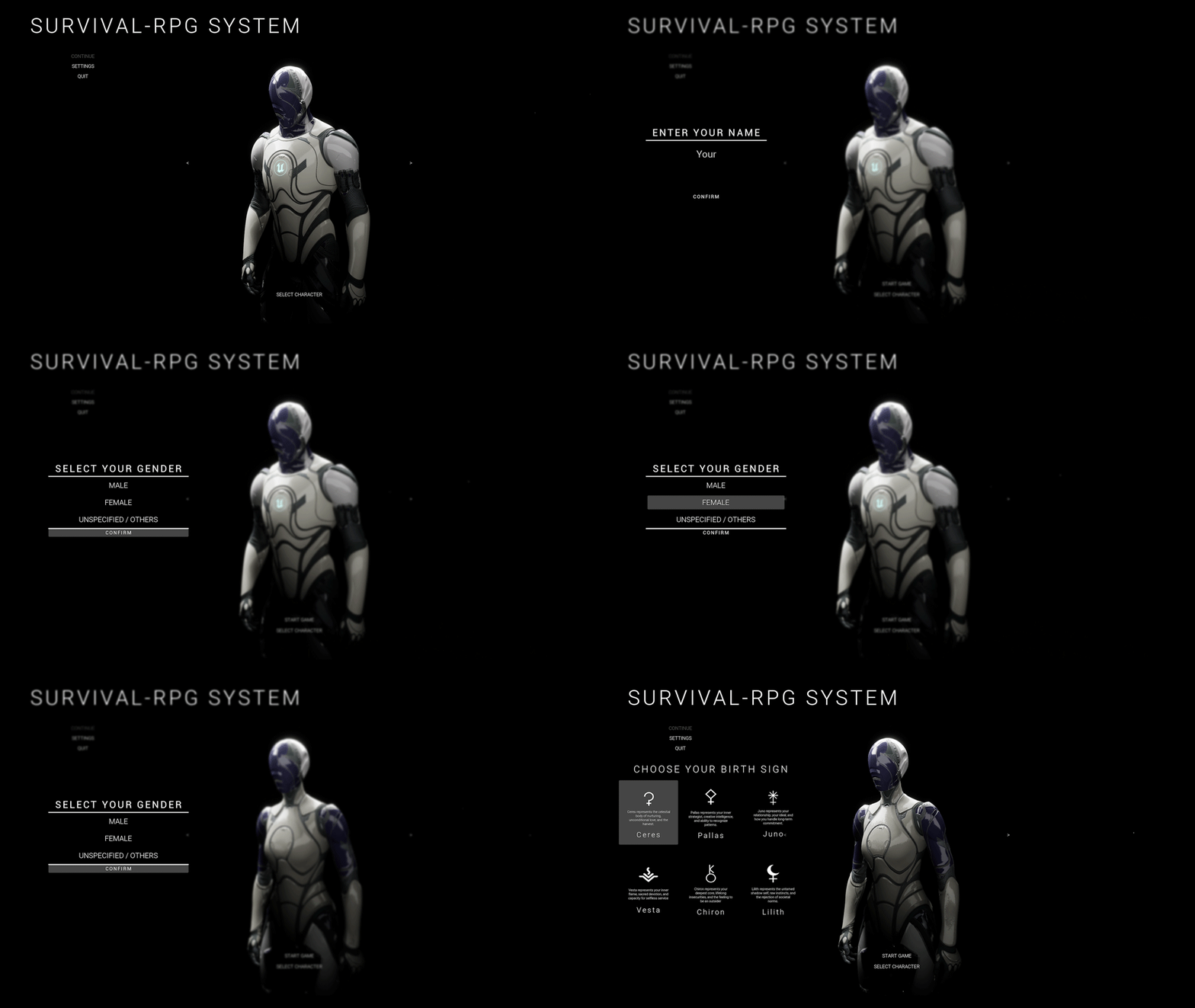
Developed entirely with Blueprint Visual Scripting in Unreal Engine 5, these gameplay systems are designed to support immersion by seamlessly integrating gameplay mechanics with level design.

TOOLS & ADDITIONAL BP SYSTEMS
-
Dynamic Day & Night Cycle
-
Weather System
-
Interactive Objects
-
Inventory System
-
Crafting
-
Quest System
-
Data Asset Architecture
-
Blueprint Component Framework

ITERATIVE DESIGN PROCESS
The project has undergone numerous gameplay and artistic iterations over several years.
Beginning with greyboxing and gameplay blockouts, the environments progressively evolved through stylized asset production before incorporating high-quality Megascans assets.
Each iteration focused on improving readability, gameplay flow, exploration, and environmental storytelling rather than simply increasing visual fidelity.

LIGHTING & POST-PROCESSES
Each biome features a distinct lighting palette and post-processing profile that immediately communicates its atmosphere and gameplay identity.
These visual treatments help players recognize new regions at a glance, reinforce environmental storytelling, and improve navigation throughout the open world.
